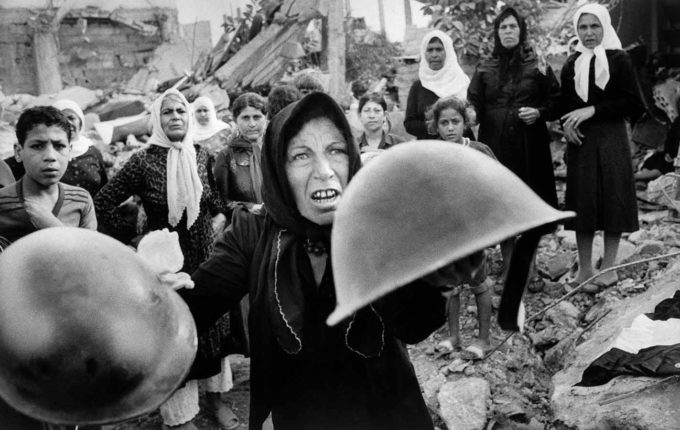
The Palestinian Rights Committee (PRC) was formed during the 1982 Israeli invasion of Lebanon and after the massacre of Palestinians at Sabra and Shatila in Beirut. Several Palestinians, Palestinian-Americans, and others met and began holding a vigil each September at the Federal Building (near the Palace Theater) in Albany on the anniversary of the massacre.
Up until about 2000, the PRC was known as the Capital District Committee for Palestinian Rights. During the more than forty years of the CDCPR/PRC, Palestinians and Jews have been active members. The CDCPR/PRC has always rejected any accomodation with anti semitism. About fifteen years ago, the PRC joined the Upper Hudson Peace Action (UHPA), the local affiliate of a national peace group, to demonstrate to all that the PRC is in fact a peace group.
The CDCPR initially operated informally. By 1986, a larger nucleus had formed, a contact list created, and other events were held. During the First Intifadah, the CDCPR held annual dinners at which a hundred people enjoyed excellent Palestinian foods and comradery, a newsletter was published and mailed several times annually, CDCPR members attended the annual ADC conferences in Washington, DC and CDCPR members began publishing letters to the editor to local newspapers.
The Times Union printed almost none, but the Schenectady Daily Gazette and Troy Times Record printed many. CDCPR began meeting at the Social Justice Center in Albany, bringing speakers to the region, and occasionally counter demonstrating at Zionist events.
Among the major achievements of the CDCPR during this era were educating local residents about Palestinian rights and Israeli oppression. Local Zionists faced organized, articulate resistance for the first time. Gradually local peace groups became comfortable advocating for Palestinian rights and working with CDCPR members. Support for Palestinian rights soared during the Intifadah.
The local newspapers could be counted on to quickly print nasty–even vicious–editorials whenever Palestinians killed Israeli Jews. However they never editorialized about the vastly greater and systemic violence of the Israeli government, or the enthusiastic support for Israel settler-colonialism by the United States.
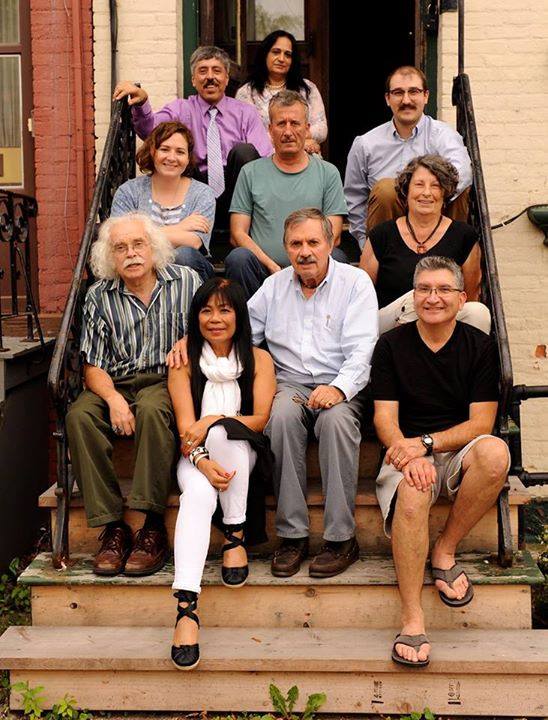
Meet the members
Sameeh and Alice had lived in Palestine until 1948 when they were terrorized and immediately fled when Zionist militia soldiers invaded their village and warned them they would soon get the Deir Yassin treatment. They fled with their first child and spent ten years each in Lebanon and Syria (I am not sure which was first) and then moved to Delmar, near Albany. Sameeh told me his earliest memory was an Ottoman cavalry soldier kicking a Palestinian in the head. Alice said she could understand why Jews fleeing the Nazis came to Palestine and said Jews would probably have been welcomed by Palestinians had they come in smaller numbers, integrated themselves with Palestinians, and treated Palestinians with respect. Alice was sometimes called a “terrorist” by Zionist students at the University at Albany but always maintained her self control, politely telling those who would listen that she, herself, was the victim of terror. She said she was amazed at the disparity between how much attention the Holocaust received in the United States and how little the Nakba did.
Paul Gregory and Maria Mascarella were a couple living in the Albany area. They worked on many causes. Maria had immigrated to the US from Italy at age nine. She believed many Jews were traumatized by the Holocaust and this collective horror helped explain their mistreatment of Palestinians.
Adnan Farah was a Palestinian and university student living in Albany pursuing a chemistry graduate degree. He had grown up in Lebanon. Despite two of his brothers having been killed by the Israelis, in 1948 and 1982, he has no hatred of Israelis. He wanted reconciliation and peace and had a beautiful letter saying so printed in the Schenectady Gazette on December 25 (Christmas Day) one year. He could explain the details of 20th century Lebanese history better than anyone I ever met.
Zuhair Al-Atwi: I joined the Palestinian Committee in 1984 When I came to Albany Medical Center to do my training as a Nuclear Medicine Technologist and still a member as of today . As a Palestinian that was the least I can do. Even when I was a student at the University I participated in cultural and Political events to teach the Americans about the Political and Cultural life of the Palestinian people. I even tried to be an excellent student to show the American Student that the Palestinians are Human beings with aspirations and not Terrorist as the Zionists want them to know. I am teaching my American kids to be very proud of their Palestinian heritage and to be good American-Palestinian Ambassadors.
Eyad has been an activist since 2005 and credits his “political awakening” to the signing of the original Patriot Act. He is Palestinian, Syrian, American, Pansexual Queer. Eyad graduated from SUNY Albany where he majored in Political Science with a concentration in Global Politics. Prior to that, he acquired an Associates in Public Administration studies while pushing for Marriage Equality in New York at HVCC. He’s a Co-founder and serves as Director of, Projects, Action, and Activism. In addition, he also conducts engagement and outreach for HI. He is also a community organizer for GetEQUAL, during the Occupy movements and currently countless other movements that cultivates intersectional and transformative work. He Co-Founded QPEN ( The Queer Palestinian Empowerment Network), a community organization/group that is dedicated to cultivating and empowering LGBTQ Palestinians in movement, in healing, and in leadership.
Paul and Katja Rehm traveled to Palestine/Israel with a delegation from Every Church a Peace Church more than 20 years ago. While there, we met with Palestinian, Israeli and International peace and justice groups working nonviolently to support Palestinian human rights and end the Israeli government’s occupation of Palestinian land. We saw, first-hand, the effects of Zionist settler violence and the Israeli military’s racist practices. Upon returning to the U.S., we joined the Palestinian Rights Committee and have, since then, been working with the PRC and other groups to educate friends and neighbors, to end the Israeli occupation and to secure peace with equal justice for all who live in the Holy Land.
Carl strock Traveling to Jerusalem as an innocent tourist in 2012, I had the opportunity to visit the West Bank as the guest of a Palestinian family and get my eyes opened to a situation that I did not know existed. When I wrote about the experience for a local newspaper I was vilified by Jewish leaders, who launched a boycott of the paper, leading finally to my retirement. It was then that I took refuge in the Palestinian Rights Committee.
David Aube lives in Albany and was a longtime CDCPR member during the 1980s and 1990s and still fully committed to the cause. He was at times the group manager. David visited Palestine in the 1990s and returned more committed than ever to Palestinian rights.
previous members: Grace white, Ellie Bernstein, Alexandra Lusak, Mary Folsom, Sami Massoud, Said Yassin, Amy, Tom and David Trabka and David’s wife, Fadi Kanan, Erin Obrien, John Benson and Jennifer Ilenberg
 Palestinian Rights Committee